Jun 02 2004 - Physiology Web Site
Mind, Metabolism, and Melatonin : Time’s Arrow Towards The Future
by
J.C George
Department of Zoology, University of Guelph, Guelph
Ontario, Canada, N1G 2W1
Journal of Science, Technology , and Humanities :
July - December 2003,Vol.1 No.2. pp.195-216
Received August 2003, accepted November 2003
ABSTRACT
Man, like all other organisms, is a product of evolution. It was not a dog eat dog process of competition for the survival of the fittest, as is generally believed. It was accomplished to a large extent through mutual cooperation and peaceful coexistence among species. Human mind is man’s greatest acquisition that separates him from animals. (more…)
Feb 29 2004 - Physiology Web Site
Welcome to the Physiology Web Site (.ws)
The Physiology Web Site (.ws) is brought to you by Dr. J.C. George.
Dr. John Caleekal George is a zoologist and Canadian physiologist who has studied and conducted research in depth on the physiological basis of animal migration, in particular bird migration.
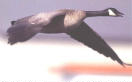
A link between the external environment and the endocrine system was observed in his studies on the pineal gland which in turn led him to the discovery of the pineal gland hormone, melatonin, being a hypometabolic hormone regulating body temperature, heart rate and breathing frequency in birds. Melatonin was shown to act as hypothermic hormone so as to prevent heat stroke during prolonged muscular activity.
Professional awards received by Professor George include an award for excellence in research from Sigma Xi, of which he was elected president of the Guelph, Ontario, Canada chapter. He was the Honorary chairman of the Fifth Canadian Pineal and Melatonin Symposium held in Guelph and was appointed to the research advisory board of the American Biographical Institute as well as fellow of the New York Academy of Sciences and included in the Honours List of 2000 Outstanding Intellectuals of the 20th Century (2000).
For a biographical outline of Dr. George see the Premiere Edition of Great Minds of the 21st Century, published by American Biographical Institute, 2003.
Feb 27 2004 - Physiology Web Site
New Journal - Smithiana Special Publication
New Journal - Smithiana Special Publication
posted by Jen Sweezie, Project Coordinator
We are very pleased to announce that Smithiana Special Publication, published by the South African Institute for Aquatic Biodiversity, is now available on the Bioline International website. This journal can be found on our “Special Publications” page. (more…)
Jan 01 2004 - Physiology Web Site
Impact of Enviornmental Lead Pollution on the Physiology of Birds
By J.C. George
Department of Zoology , University of Guelph, Guelph, Ontario, Canada N1G 2W1
Fax: (519) 767-1656; email: jgeorge@uoguelph.ca (more…)
Dec 22 2003 - Physiology Web Site
First Words On Chimp - Human Genetic Differences
By rickyjames, Section News
SciScoop has previously reported the placement on the Internet of vast quantities of chimp genome data…but what does it all mean? This Cornell University press release summarizes the most obvious nuggets which have fallen from the trees to hit us on the head:
Nearly 99 percent alike in genetic makeup, chimpanzees and humans might be even more similar were it not for what researchers call “lifestyle” changes in the 6 million years that separate us from a common ancestor. Specifically, two key differences are how humans and chimps perceive smells and what we eat. (more…)
Nov 24 2003 - Physiology Web Site
Holiday for herpetology is a hit.
Snake experts and fanciers gather at a Des Moines pet store to praise their ssssssssslithery friends. (more…)
Nov 13 2003 - Physiology Web Site
The Third Chimpanzee
The Third Chimpanzee is Jared Diamond’s exploration of the what the 2% difference in human DNA and chimpanzee DNA changed in our structure. His hypothesis is that some of the traits that this 2% exploited are apparent in animals today and that the were small fundamental changes. (more…)
Nov 07 2003 - Physiology Web Site
The Science of Love - Our forgotten Mammal Brain and its power over us.
A General Theory of Love by Lewis Amini and Lannon - A review
by Robert Paterson
Why are we collectively so unhappy? Unhappy at home and at work? Have we put our rational brain too high on the pedestal? If we understand our Mammalian or LiMbic Brain better might we have a better time? Why are relationships so important to us? What is a real relationship? What is wrong with our relationships today? How important is having the right relationships to our happiness and to our health? (more…)
Sep 11 2003 - Physiology Web Site
Young Sea Animals Clone Themselves—century-old Debate Halted
After more than a century of intensive study, scientists have assumed that larvae of non-parasitic invertebrates reproduce only very rarely, but new research by University of Alberta scientists overthrows this conventional wisdom. Graduate student Alexandra Eaves and Dr. Richard Palmer, from the U of A’s Faculty of Science, have found that asexual cloning by some marine invertebrate larvae is not as rare and enigmatic a phenomenon as previously assumed. (more…)
Aug 16 2002 - Physiology Web Site
Songbird Population Declines Linked to Acid Rain.
The first large-scale study to provide a clear link between acid rain and widespread declines across the breeding range of a songbird, the wood thrush, points to calcium depletion as a possible cause, Cornell University ecologists say. (more…)
Jan 01 2002 - Physiology Web Site
Balancing Mind and Body : Putative Role of Melatonin in Hypometabolism During Transcendental Meditation
J. Anim. Morphol. Physiol., Vol. 49, Nos. 1 & 2, pp 1 to 11, 2002 (more…)
Jan 01 2001 - Physiology Web Site
Why Avian Physiology ?
The Indian Journal of Classical Ornithology & Avian Physiology, PAVO, 39, Nos. 1& 2, pp 1 to 24, 2001 (more…)
Vaspressin, Vasotocin and Melatonin are Endogenous Antipyretics : Do Menopausal “Hot Flashes” and Melatonin Have a Conection ?
J. Anim. Morphol. Physiol., Vol 48, Nos. 1 & 2, pp 1 to 10, 2001 (more…)
Jan 01 2000 - Physiology Web Site
Melatonin and Uric Acid in Amniote Evolution : Their Selective Physiological Roles
J. Anim. Morphol. Physiol., Vol 47, Nos 1 & 2, pp 1 to 24, 2000 (more…)
Jan 01 1999 - Physiology Web Site
Hormonol Relations in Autoregulatory Thermoregulation During Flight in Birds
J. Anim. Morph. Physiol., Vol. 46, Nos. 1 & 2, pp 71 to 76, 1999 (more…)
Birds As Bioindicators of Ecotoxicological Effects of Heavy Metal Pollution
J.Anim.Morphol.Physiol Vol 46, Nos 1 & 2, pp1 to 22, 1999 (more…)
|